

Migraines With or Without Aura
Migraines are a neurological disorder that cause recurring headache attacks and heightened sensitivity to light, sound, and movement. At Charis Neurology, we provide focused evaluation for migraines with or without aura as part of our comprehensive Head & Brain neurology services.
Unlike occasional headaches, migraines often follow recognizable patterns over time and can significantly interfere with daily functioning. For many patients, migraines are not isolated events but a chronic neurological condition that benefits from neurologist-led care rather than episodic treatment alone.
When Should You See a Neurologist for Migraines?
While some migraines are initially managed in primary care, neurological evaluation is often helpful when migraines become recurrent, disruptive, or difficult to control. You may benefit from seeing a neurologist if your migraines:
Occur frequently or follow a predictable pattern
Interfere with work, school, or daily responsibilities
Are associated with visual symptoms, numbness, tingling, or speech difficulty
Do not respond well to current or prior medications
Are increasing in frequency, duration, or severity
Feel different from prior migraine attacks
Migraines often follow identifiable neurological patterns that become clearer through specialized evaluation. These features may indicate the need for a more targeted neurological approach to care. Patients with broader concerns about chronic or severe headaches may benefit from a more general neurological headache evaluation.




Understanding Migraine With Aura vs Migraine Without Aura
Migraines are commonly classified based on whether temporary neurological symptoms occur before or during the headache phase.
Migraine without aura typically presents as moderate to severe head pain, often accompanied by nausea, light sensitivity, or sound sensitivity.
Migraine with aura includes short-lasting neurological symptoms such as visual disturbances, flashing lights, blind spots, numbness, tingling, or difficulty with speech.
A neurologist evaluates aura symptoms carefully to confirm that they follow migraine-related neurological patterns rather than indicating another neurological condition.
How Are Migraines Diagnosed by a Neurologist?
Migraine diagnosis is primarily clinical and based on recognizing consistent symptom patterns over time rather than a single test. During a migraine evaluation, a neurologist may:
Review headache frequency, duration, and recurrence patterns
Identify potential triggers and symptom clusters
Perform a comprehensive neurological examination
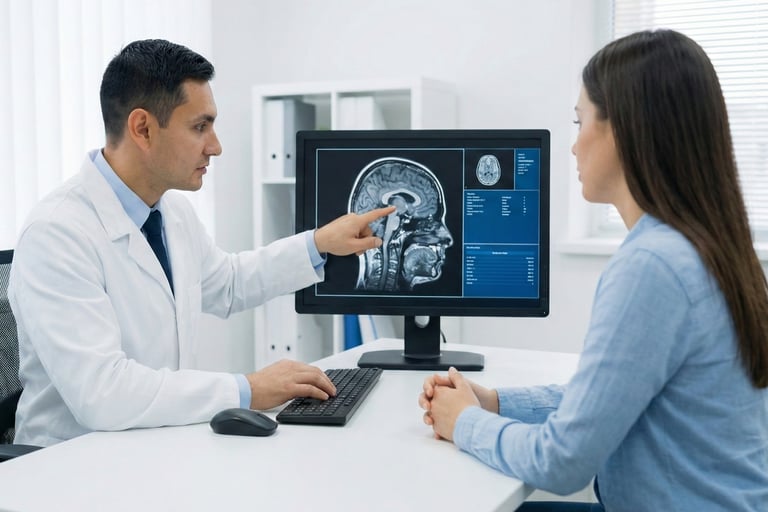
Recommend brain imaging when symptoms or exam findings warrant further evaluation
Consider additional testing if migraine features are atypical or evolving
Brain imaging or additional diagnostic testing may be recommended when symptoms or exam findings suggest it would provide meaningful information.
Call us (407) 603-1633 or request an appointment online
The Neurologist’s Role in Migraine Care
Migraines are a primary neurological disorder, but their symptoms can overlap with other conditions affecting the brain and nervous system. A neurologist’s role is to confirm the diagnosis, rule out alternative causes, and guide treatment decisions with long-term safety and effectiveness in mind.
For patients with frequent or complex migraines, neurologist-led care provides continuity and deeper insight into symptom patterns.
What Happens During a Neurology Migraine Evaluation?
Migraine evaluation focuses on understanding the pattern of attacks and their impact on daily life.
Step 1: Listening to Your Migraine History
Your neurologist reviews when migraines began, how often they occur, associated symptoms, and how attacks have changed over time.
Step 2: Comprehensive Neurological Examination
A neurological exam helps assess brain and nervous system function and identify signs that suggest migraine versus another condition.
Step 3: Diagnostic Testing (If Needed)
Imaging or additional testing may be recommended when symptoms suggest it would provide meaningful information.
Step 4: Clear Explanation & Treatment Strategy
You’ll receive a clear explanation of findings and a plan tailored to your migraine pattern and goals.
Neurologist-Guided Migraine Treatment & Prevention
Migraine care focuses on reducing attack frequency, improving predictability, and minimizing the impact of migraines on daily life. Treatment plans are individualized and may include:
Preventive strategies aimed at decreasing migraine frequency
Acute treatment options for managing migraine attacks
Advanced or infusion-based therapies for certain migraine patterns
Identification and management of lifestyle or environmental triggers
Ongoing follow-up to refine treatment over time
Effective migraine care is not one-size-fits-all and often evolves as migraine patterns change.
Why Patients Choose Charis Neurology for Headache Care
Charis Neurology provides neurologist-led headache evaluation for patients in Lake Mary, Seminole County, Volusia County and Orange County, and surrounding Central Florida communities. Our focus is on clear diagnosis, thoughtful treatment, and compassionate care.
Board-certified neurological care led by Dr. Sherif Makar
On-site MRI and EEG testing for faster answers
Collaborative team approach with experienced providers
Clear, compassionate explanations
Serving Lake Mary and Central Florida
We walk side-by-side with patients — every step of the way call today at (407) 603-1633 or schedule an appointment online.


Frequently asked questions
Are migraines considered a neurological disorder?
Yes. Migraines are a neurological disorder involving abnormal brain signaling and heightened sensory sensitivity. Neurologists diagnose and manage migraines based on recurring symptom patterns, associated neurological features, and response to treatment.
What’s the difference between migraines and regular headaches?
Migraines typically involve recurring attacks with moderate to severe head pain and additional symptoms such as nausea, light sensitivity, sound sensitivity, or neurological symptoms. Regular headaches are often less severe and lack these associated features.
What causes migraines to keep coming back?
Migraines often recur due to a combination of neurological sensitivity, genetic factors, and internal or external triggers. Rather than a single cause, migraines tend to follow patterns that can be identified and managed with neurological care.
Can migraines occur without severe head pain?
Yes. Some migraines involve neurological or sensory symptoms with little or no head pain. These can include visual changes, numbness, or other sensory disturbances and still represent migraine activity.
When should migraines be evaluated by a neurologist?
You should consider neurological evaluation if migraines are frequent, worsening, interfere with daily life, involve neurological symptoms, or are not responding to treatment. A neurologist helps determine whether symptoms follow migraine patterns or suggest another condition.
Do migraines always have identifiable triggers?
No. While many people identify triggers such as stress, sleep changes, or certain foods, migraines can also occur without a clear trigger. Neurological evaluation focuses on recognizing patterns over time rather than relying on a single cause.
Will I need an MRI or CT scan for migraines?
Imaging is not required for all migraine patients. A neurologist may recommend imaging if symptoms, exam findings, or changes in migraine patterns suggest it would provide useful information. Diagnostic testing is used selectively, not routinely. This approach aligns with guidance from professional neurological organizations.
Can migraine patterns change over time?
Yes. Migraine frequency, severity, and associated symptoms can evolve over time. Changes in migraine patterns are one reason re-evaluation by a neurologist may be helpful.

Neurology Services
Explore additional care options that complement your Neuro-Oncology evaluation, including Head & Brain, Nerves & Movement, and full Diagnostics & Treatment.
Head & Brain
Short, clear evaluation for headaches, seizures, memory changes, and cognitive symptoms.
Learn more >
Managing neuropathy, tremors, imbalance, and nerve-related symptoms with precise testing and personalized treatment.
Learn more >
Comprehensive evaluation for brain tumors, masses, and neurological changes — from first symptoms to ongoing management.


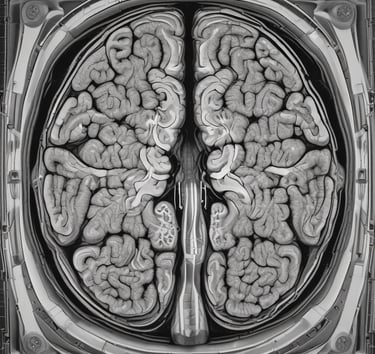


Same-day MRI, EEG, and EMG/NCS testing available onsite to help diagnose symptoms accurately and quickly.
Learn more >
Request an Appointment or Ask a Question
Our team responds within one business day.
For urgent concerns, please call us directly.
Phone
Location
Serving Central Florida
Seminole • Orange • Volusia • Lake County
Please do not submit sensitive medical information through this form.
For emergencies, call 911.
Contact Us
Serving Central Florida
Seminole County
Lake Mary, Sanford, Longwood, Oviedo, Altamonte Springs, Winter Springs, Casselberry, Heathrow, Wekiwa Springs, Forest City, Sanlando Springs
Volusia County
Deltona, Orange City, DeBary, Lake Helen
Orange County
Orlando, Winter Park, Maitland, Apopka, Eatonville
Patient Center


Where precision medicine meets genuine compassion. We provide end-to-end diagnostics and treatment for the entire family under one roof.


© 2026 Charis Neurology. All rights reserved.
If you are experiencing a medical emergency, please dial 911 or go to the nearest emergency room. Do not use this website for urgent medical needs.