Living with multiple sclerosis (MS) can feel profoundly unpredictable. Symptoms may appear without warning, remit for months, then return in entirely different forms. The uncertainty itself, not knowing what tomorrow will bring, is one of the hardest aspects of the disease for patients and families to navigate.
At Charis Neurology in Lake Mary, FL, we approach MS with both clinical precision and genuine compassion. Understanding your diagnosis clearly, having access to advanced diagnostics and treatment, and building a long-term relationship with your neurologist are the foundations of living well with MS. This guide explains what MS is, how it is diagnosed and treated today, and how we support our patients across Central Florida.
What Is Multiple Sclerosis?
According to the National MS Society, multiple sclerosis is a chronic autoimmune condition in which the body's immune system mistakenly attacks the protective myelin sheath covering nerve fibers in the brain and spinal cord. When myelin is damaged or destroyed, the communication signals traveling between the brain and body are disrupted, slowed, or blocked entirely, producing a wide range of neurological symptoms.
The most common form is relapsing-remitting MS (RRMS), characterized by episodes of acute neurological symptoms (relapses) followed by periods of partial or complete recovery (remission). Over time, some patients transition to secondary progressive MS, in which neurological function gradually declines between relapses.
Why Is MS So Unpredictable?
MS manifests differently in every patient because it can affect virtually any region of the brain and spinal cord. The location of demyelinating lesions determines which symptoms appear. A lesion in the optic nerve causes vision changes. A lesion in the cerebellum causes balance and coordination problems. A lesion in the spinal cord can cause weakness or sensory changes in the limbs. This variability, in which symptoms appear, how severe they are, and how completely they resolve, is intrinsic to the disease and not a reflection of inadequate treatment or personal resilience.
Common Early Symptoms of MS
Early MS symptoms can be subtle and intermittent, easily dismissed as stress, fatigue, or minor health issues. Common initial indicators include:
- Numbness, tingling, or electrical sensations in the limbs or face
- Sudden or unexplained leg or arm weakness
- Blurry vision, double vision, or sudden loss of vision in one eye (optic neuritis)
- Balance or coordination difficulties, including unexplained stumbling
- Fatigue that is disproportionate to activity level, profound, not fixed by rest
- Mental fog, slowed thinking, or word-finding difficulty
- Episodes of dizziness or vertigo
Recognizing these symptoms early, and seeking neurological evaluation promptly, provides valuable diagnostic clues before significant disability develops. The window for starting disease-modifying therapy is widest at the beginning of the disease course.
How MS Is Diagnosed at Our Lake Mary Clinic
There is no single definitive test for MS. Accurate diagnosis requires synthesizing symptom history, neurological findings, and objective test results, a process that takes expertise and thoroughness.
1. Neurological Examination
Our clinical evaluation assesses reflexes, coordination, vision, gait, sensation, and cognitive function to map which nerve pathways are affected and whether the pattern is consistent with MS.
2. MRI of the Brain and Spine
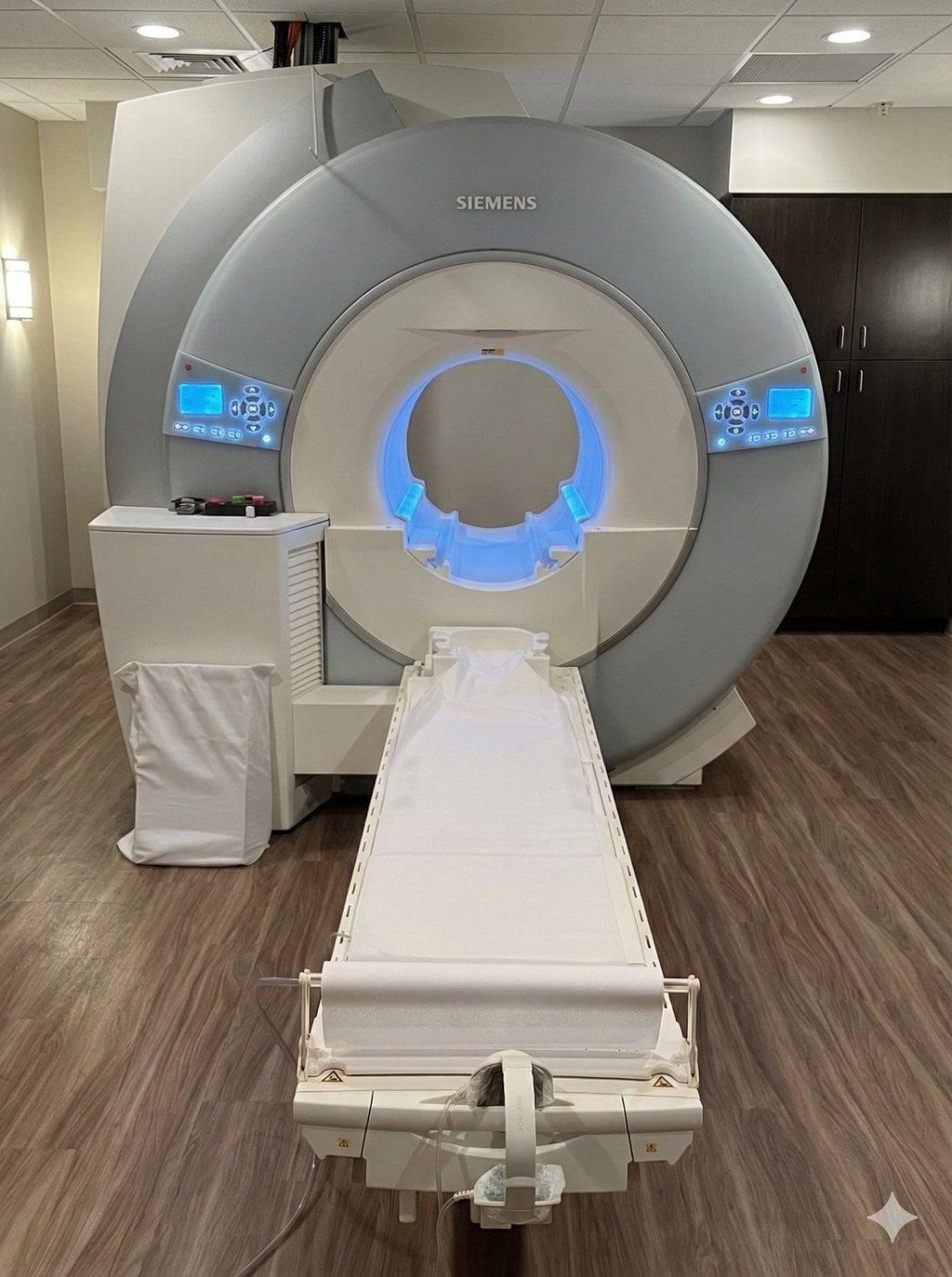
MRI is the single most important tool for MS diagnosis. It detects inflammatory lesions (areas of active demyelination) and older scarring (sclerosis). At Charis Neurology, we perform MRI in-house using a high-field, wide-bore scanner, providing patient comfort and diagnostic clarity without the delays of external referrals.
3. Bloodwork
Comprehensive blood testing eliminates conditions that closely mimic MS, including vitamin B12 deficiency, Lyme disease, lupus, and other inflammatory or infectious conditions. This step is essential, a misdiagnosis of MS can lead to years of unnecessary treatment.
4. Additional Testing When Needed
- Visual Evoked Potentials (VEPs): Measure the speed of signals traveling along the optic nerve, often slowed by subclinical demyelination
- Lumbar Puncture (Spinal Tap): Analysis of cerebrospinal fluid for oligoclonal bands and other markers of central nervous system inflammation
- Cognitive Assessment: Formal neuropsychological testing when cognitive symptoms are prominent
We believe diagnosis should prioritize thoroughness over speed, giving you accurate answers rather than fast ones that might need to be revised.
How MS Is Treated Today
While MS remains incurable, modern treatment has transformed the outlook for newly diagnosed patients. Therapies available today are dramatically more effective than those available even a decade ago.
1. Disease-Modifying Therapies (DMTs)
DMTs are the cornerstone of MS management. These medications reduce the frequency and severity of relapses, slow the accumulation of lesions on MRI, and, in many patients, slow overall disability progression. Options span a wide spectrum of efficacy and route of administration, including daily oral tablets, weekly injections, and monthly or annual infusions. Selecting the right DMT requires weighing your disease activity, lifestyle, family planning status, and tolerance for side effects, a decision made collaboratively between you and Dr. Makar.
2. Symptom-Management Medications
Beyond disease modification, targeted medications address the specific symptoms that most impact quality of life: spasticity, neuropathic pain, bladder dysfunction, fatigue, and cognitive slowing. Effective symptom control is essential to maintaining function and wellbeing between relapses.
3. Infusion Therapy
Several of the most effective MS disease-modifying therapies are administered by infusion, including natalizumab (Tysabri), ocrelizumab (Ocrevus), and others. Charis Neurology provides onsite infusion services at our Lake Mary clinic, allowing patients to receive these treatments in a comfortable, familiar environment with the clinical team who knows their case.
4. Physical, Occupational, and Cognitive Rehabilitation
Rehabilitation therapy plays a vital role in MS care, maintaining strength, balance, endurance, and functional independence. Our team coordinates referrals to specialized MS rehabilitation therapists when indicated.
5. Lifestyle Approaches
Emerging evidence supports the role of lifestyle in MS outcomes. Adequate sleep, stress reduction through mindfulness or counseling, aerobic exercise, and vitamin D optimization all appear to influence MS disease activity and quality of life. These are not substitutes for medical treatment, but powerful complements to it.
How Charis Neurology Supports MS Patients
We understand that an MS diagnosis can feel overwhelming. Our commitment to our patients goes beyond writing prescriptions:
- Clear, Honest Communication: We take time to explain what your diagnosis means, what your MRI shows, and what your treatment options involve, in plain language, without minimizing the challenges ahead.
- Advanced Onsite Diagnostics: MRI, EEG, nerve studies, and infusion therapy, all available under one roof in Lake Mary.
- Long-Term Partnership: MS management is a decades-long journey. We build relationships with our patients, follow disease activity over time, and adjust treatment proactively.
- Compassionate, Consistent Care: MS is unpredictable. Your care team should not be. We aim to be a stable, reliable presence throughout your journey.
When to Seek Evaluation
If you are experiencing episodes of numbness, weakness, vision changes, or balance problems, particularly if they came on suddenly, lasted more than 24 hours, or have occurred more than once, schedule a neurological evaluation promptly. Early diagnosis and early treatment are the most powerful tools we have.
Charis Neurology serves patients throughout Seminole, Volusia, and Orange Counties, including Lake Mary, Sanford, Longwood, Oviedo, Deltona, Orlando, and Winter Park.
Charis Neurology
775 Primera Blvd, Suite 1031
Lake Mary, FL 32746
Phone: (407) 603-1633 | Fax: (833) 438-5536
Hours: Monday to Friday, 8:00 AM to 5:00 PM